
What Really Happens to Memory as We Age — and What Doesn't
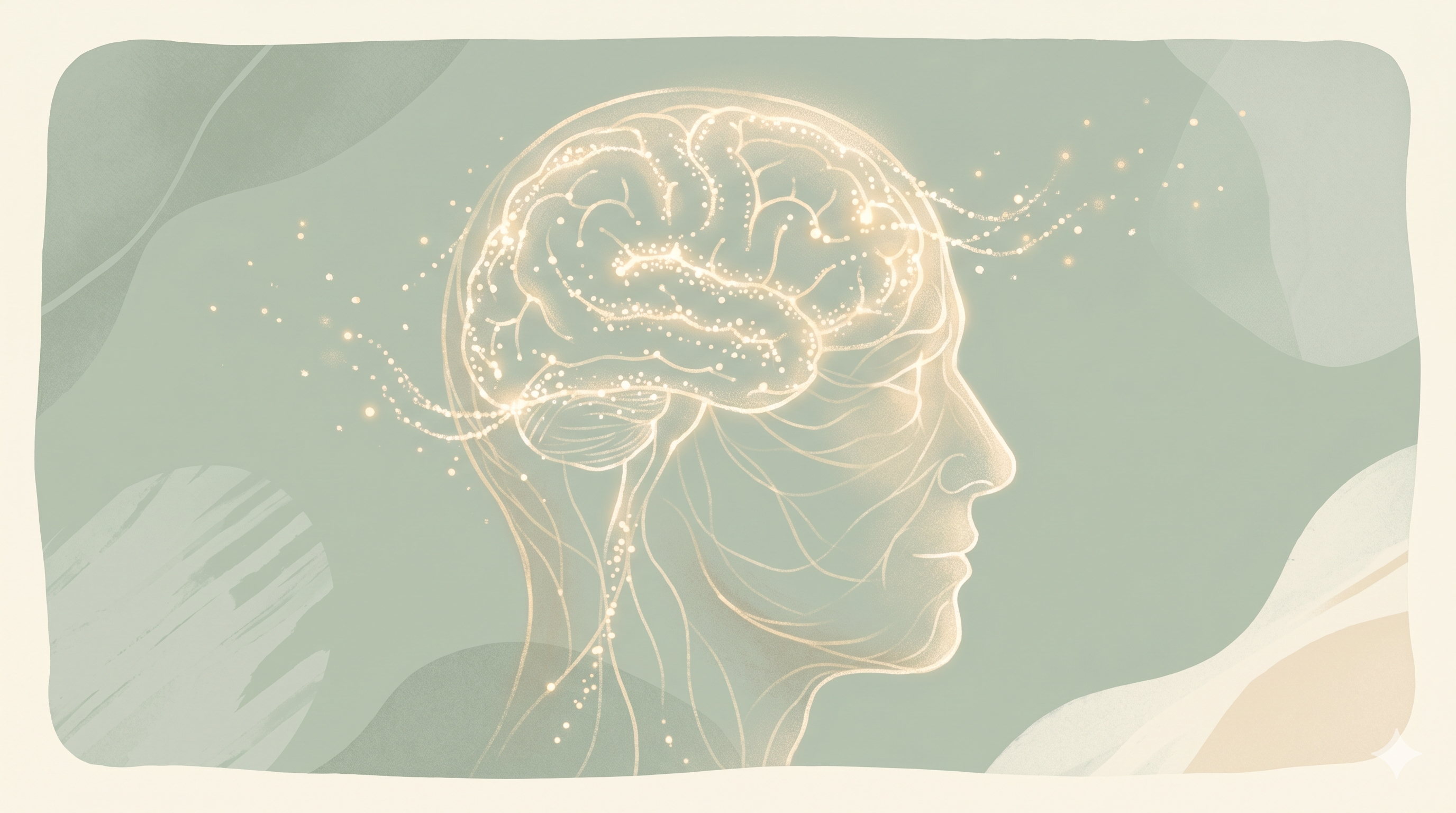
Some memory change is a normal part of growing older, and some is not. Occasionally blanking on a name, walking into a room and forgetting why, or needing a beat longer to recall a word are ordinary features of a healthy aging brain.
Some memory change is a normal part of growing older, and some is not. Occasionally blanking on a name, walking into a room and forgetting why, or needing a beat longer to recall a word are ordinary features of a healthy aging brain. Consistently getting lost in familiar places, repeating the same question within minutes, or losing the thread of how to do a long-practiced task is a different category — and worth a conversation with a clinician. The hard part, for most of us, is telling the two apart without either panicking or dismissing.
This is the first piece in our Brain Health series for Alzheimer's & Brain Awareness Month, and we want to start where the worry usually starts: Is this normal?
Why does memory change with age at all?
The aging brain is not simply a younger brain running slower. Certain regions — notably the hippocampus, central to forming new memories — change with age, and the speed at which we retrieve and process information tends to decline gradually from midlife onward. This is why the tip-of-the-tongue feeling becomes more familiar with the decades: the information is there, but the retrieval path is a little less efficient.
Crucially, this kind of change is usually about speed and access, not loss. The memory of your daughter's wedding hasn't evaporated; it may just take a moment longer to surface, or need a cue to come back. That distinction — slower retrieval versus genuine absence — is one of the most useful mental models for reading your own mind as you age.
It's also worth saying plainly: a great deal of what gets blamed on "aging" is actually sleep debt, stress, medication side effects, untreated hearing loss, depression, or simply doing three things at once. These are common, and many are reversible. Forgetfulness is a symptom with a long list of causes, and age is only one of them.
What does normal age-related memory change look like?
Researchers and clinicians tend to describe ordinary, non-worrying changes in recognizable terms:
- Sometimes misplacing everyday items, then retracing your steps and finding them.
- Forgetting a name or appointment, then remembering it later.
- Occasionally struggling to find the right word.
- Needing lists or reminders more than you used to — and then using them effectively.
The common thread is that the lapse is occasional, you're aware of it, and your day-to-day independence is intact. You compensate, and life continues.
When is memory loss a warning sign?
The pattern that warrants attention is qualitatively different from "more of the same forgetting." Signs that clinicians take seriously include memory loss that disrupts daily life, difficulty completing familiar tasks, getting confused about time or place, new problems with words in speaking or writing, misplacing things and being unable to retrace steps, and withdrawal or notable changes in mood and personality. Repetition is a particularly meaningful flag: asking the same question several times in a short span, or telling the same story unaware it was just told.
A helpful framing: normal aging is forgetting where you parked the car; a warning sign is forgetting that you drove. It's an oversimplification, but it captures the shift from a lapse you notice and recover from to a gap that alters function.
None of this is something to self-diagnose. Many treatable conditions mimic dementia, and only a proper evaluation can sort them out. The point of knowing the signs isn't to label yourself or a loved one — it's to know when the answer to "should we get this checked?" is yes.
How common is serious memory decline?
Here the numbers deserve honesty in both directions. Serious decline is common enough to take seriously and rare enough that ordinary forgetting is usually just that. Among U.S. adults 65 and older, roughly 1 in 9 has Alzheimer's dementia, and a meaningful additional share live with mild cognitive impairment — a measurable decline that is greater than normal aging but not yet dementia, and that does not always progress.
At the same time, the great majority of older adults do not develop dementia, and a substantial portion of dementia risk appears to be modifiable rather than fixed — a hopeful finding we'll explore in a companion piece, Can Alzheimer's Be Prevented? Holding both facts at once — real risk, real agency — is the grounded view, and it's the one the evidence supports.
What should you actually do?
Three reasonable responses, none of them panic:
Notice patterns, not single moments. One forgotten name proves nothing. A consistent, worsening pattern that affects daily function over months is the signal. If a family member is noticing it before you are, that's worth listening to.
Rule out the reversible. Before assuming the worst, look at sleep, stress, mood, alcohol, hearing, and medications. Treating these can clear a surprising amount of "memory" fog.
Talk to a clinician without waiting for certainty. There's a striking gap here: surveys reported by the Alzheimer's Association find that nearly everyone values brain health, yet only a small minority have ever discussed maintaining it with their doctor. Early conversations open more doors — for treatable causes, for planning, and increasingly for early-stage options — than late ones.
Memory changes with age. That sentence is true and not, by itself, frightening. The work is in reading the change accurately: separating the slower retrieval of a healthy aging brain from the disruptions that deserve a closer look — and giving yourself permission to ask, early, without assuming the answer.
Frequently asked questions
Is forgetting names a sign of dementia? Usually not. Occasionally forgetting names — and recalling them later — is a normal part of aging. It becomes more concerning when paired with disorientation, trouble doing familiar tasks, or repeating questions within minutes.
What's the difference between normal aging and mild cognitive impairment? Normal age-related change is occasional and doesn't disrupt independence. Mild cognitive impairment (MCI) is a measurable decline beyond what's expected for age, noticeable to the person or those around them, but not severe enough to interfere significantly with daily life. MCI sometimes — but not always — progresses to dementia.
When should I see a doctor about memory? When memory problems are persistent, worsening over months, and interfering with daily life — or when people close to you are noticing changes you aren't. You don't need to be certain something is wrong to seek an evaluation.
Brain Meets Bytes explores brain health and longevity with rigor and humanity — Science First, Human Always. Subscribe to the newsletter for thoughtful, evidence-based insight, not headlines.
This article is for general education and is not medical advice. If you're concerned about your memory or someone else's, speak with a qualified healthcare professional.