Wearables After 60: What Your Watch Can Really Tell You About Healthy Aging
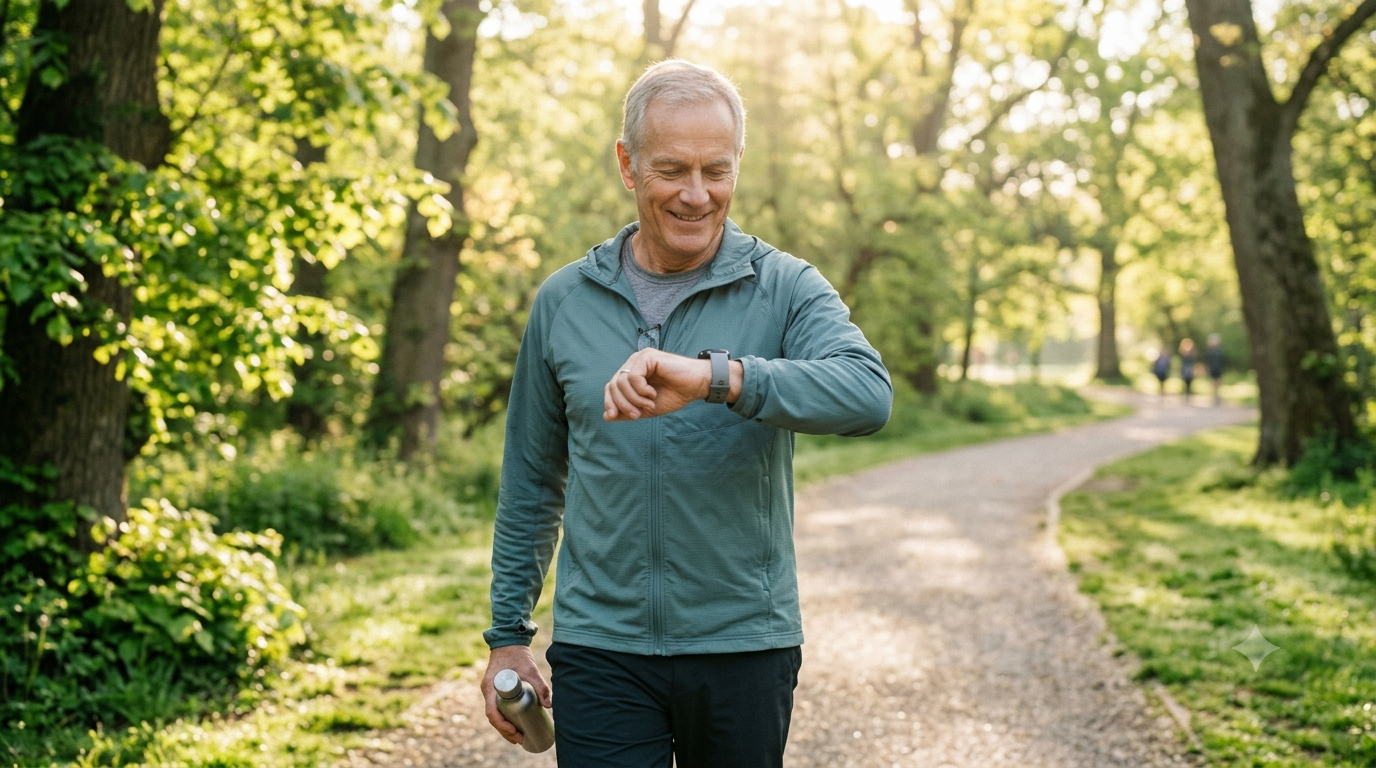
The watch on your wrist has quietly become the most capable piece of medical-adjacent equipment most people will ever own - and for adults over 60, it's not a gadget, it's genuinely useful health infrastructure.
The watch on your wrist has quietly become the most capable piece of medical-adjacent equipment most people will ever own - and for adults over 60, it's not a gadget, it's genuinely useful health infrastructure. The trick is knowing which of its many numbers matter for aging well, which are noise, and where a wearable's confidence outruns its evidence.
Key takeaways
- Four features earn the purchase: fall detection with SOS, heart-rhythm (AFib) notifications, gait and walking metrics, and sleep trends.
- Ignore the gamification layer - streaks, rings, and composite scores aren't medicine.
- Gait speed and steadiness are among the best simple predictors of health outcomes in older adults, and a watch measures them continuously.
- Choose for wearability: battery life, comfort, simplicity, and family data-sharing beat spec sheets.
Which wearable features actually matter after 60?
Four rise above the rest:
- Fall detection with automatic SOS. For anyone living alone, this is the feature that justifies the purchase by itself. A hard fall triggers a call to emergency contacts or services even if the wearer can't move - collapsing the dangerous "hours on the floor" window into minutes.
- Heart rhythm notifications. Modern watches can flag irregular rhythms suggestive of atrial fibrillation - a common, frequently silent condition in older adults and a major stroke risk factor. Wearables now catch AFib in people who had no idea; those flags, confirmed clinically, prevent strokes.
- Walking and gait metrics. Quietly, this may be the most prognostic data on the device. Walking speed and steadiness are among the best simple predictors of health outcomes in older adults, and a watch measures them continuously. A drifting gait-steadiness score is a conversation to have with a doctor, not a curiosity.
- Sleep patterns. Not for the nightly score - for the trends. Fragmenting sleep can be an early flag for pain, mood, medication effects, or cognitive change.
What should older adults ignore?
The gamification layer. Streaks, badges, and closing rings are motivating for some and demoralizing for others - an 80-year-old should feel zero pressure from an arbitrary 10,000-step target invented for marketing. Ignore "body battery"-style composite scores, take calorie burns as rough estimates, and treat blood-oxygen readings as screening hints rather than clinical data. The wearable's job is trend detection and emergency response, not judgment.
Can a wearable really support brain health?
Indirectly but meaningfully. The behaviors wearables encourage and measure - regular movement, cardiovascular exercise, consistent sleep - are exactly the behaviors with the strongest evidence for protecting the aging brain. And research increasingly explores gait, activity, and sleep signatures as early markers of cognitive change, a frontier we covered in AI in dementia care. Your watch won't diagnose anything, but the trends it collects are the raw material of early awareness - bring them to appointments.
How do you choose one?
Match the device to the person, not the spec sheet. The active 62-year-old may love a full smartwatch; an 85-year-old may be far better served by a simpler medical-alert wearable with weeks of battery life. The decision factors that matter: fall detection quality, battery life (a dead watch protects no one - daily charging is a real failure point), comfort (it only works if worn, including at night for sleep and falls), simplicity of the interface, and who else can see the data - family-sharing features turn the watch into a caregiving tool.
The honest bottom line
A wearable is a seatbelt plus a diary: it protects you in the worst moment and quietly records the trends that matter in every other one. Choose one that will actually stay on the wrist, share the data with someone who loves you, and let the doctor - not the watch - draw the conclusions.
Frequently asked questions
What's the best wearable feature for an older adult living alone? Fall detection with automatic emergency calling. It addresses the single most dangerous scenario of solo living - a fall with no one to help - and works even if the wearer is unconscious.
Can a smartwatch detect AFib reliably? Watches are good at flagging possible AFib and have caught many silent cases, but a flag is a prompt for clinical confirmation (ECG), not a diagnosis.
Are step goals appropriate for people over 70? Personalized ones, yes; default ones, no. Evidence shows benefits rising well below 10,000 steps for older adults - progress against your own baseline matters more than an arbitrary target.
Should the watch be worn at night? Ideally yes, for sleep trends and nighttime fall coverage - which makes battery life and comfort key buying criteria. If nightly wear won't happen, prioritize daytime consistency.
*Brain Meets Bytes - Science First. Human Always. Members get the wearable comparison worksheet and our episode on sensors and the aging body.*
This article is for general education and is not medical advice. Discuss wearable health data and alerts with a qualified clinician.