Nutrition and the Brain: What the Evidence Actually Says About the MIND Diet
The MIND diet is genuinely good for you — but the evidence that it specifically protects your brain is more complicated than the headlines suggest.
The MIND diet is genuinely good for you — but the evidence that it specifically protects your brain is more complicated than the headlines suggest. For years, observational studies linked this eating pattern to slower cognitive decline, and the enthusiasm was understandable. Then the first large clinical trial testing it head-to-head found no advantage over a comparison diet after three years. That doesn't mean nutrition is irrelevant to brain health — far from it. It means the honest story is subtler than "eat these foods and prevent Alzheimer's," and the subtlety is worth understanding.
What is the MIND diet?
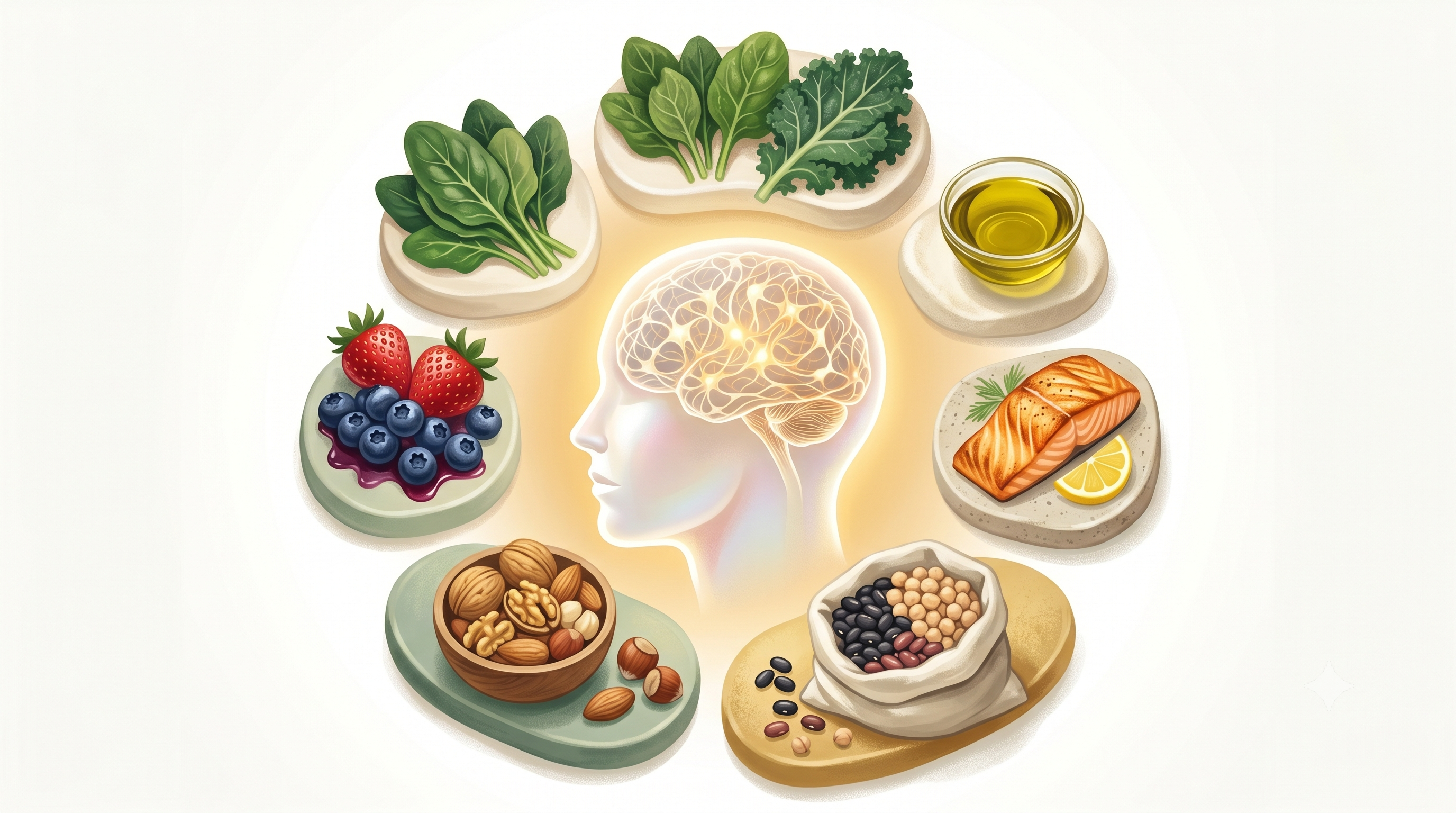
The MIND diet — Mediterranean-DASH Intervention for Neurodegenerative Delay — was designed in 2015 specifically for brain health, combining elements of the Mediterranean and DASH (blood-pressure) diets and emphasizing the foods most linked in research to cognition. In practice that means lots of leafy green vegetables, berries (blueberries and strawberries especially), nuts, olive oil, whole grains, beans, fish, and poultry — while limiting red meat, butter, cheese, fried food, and sweets.
None of that is exotic or extreme. It's a sensible, plant-forward, heart-friendly way of eating. The interesting question isn't whether it's healthy — it plainly is — but whether it does something special for the brain, above and beyond general good nutrition.
What did the observational studies find?
Encouraging things. In large observational cohorts — where researchers track what people eat and how their cognition changes over years — closer adherence to the MIND diet has been associated with slower cognitive decline and lower dementia risk. Some studies suggested people who followed it most closely had measurably better cognitive trajectories than those who didn't.
But observational studies carry a built-in limitation: they show association, not causation. People who eat a MIND-style diet also tend to exercise more, have more education and income, smoke less, and manage their health more actively. Untangling the diet's effect from everything else that travels with it is genuinely hard — which is exactly why researchers ran a proper trial.
What did the clinical trial show?
This is where the story gets honest. In 2023, the New England Journal of Medicine published the first large randomized controlled trial of the MIND diet: a three-year study of older adults without cognitive impairment but at elevated risk. Participants were assigned either the MIND diet or a control diet, both with mild calorie reduction.
The result: both groups showed small cognitive improvements — and there was no significant difference between them. The MIND diet didn't outperform the control.
That finding deserves careful reading rather than either dismissal or overreaction. A few things matter. The trial ran only three years, likely too short to detect effects on a process that unfolds over decades. The control group wasn't eating badly — they also received dietary guidance and lost weight, so this was MIND versus another reasonable approach, not MIND versus junk food. And both groups improved, which suggests the shared elements (attention to diet, modest weight loss) may have helped. So the trial doesn't show that healthy eating is pointless for the brain. It shows that this specific diet, over this timeframe, didn't beat a sensible alternative — which is a much narrower and more accurate claim than "the MIND diet doesn't work."
So should you follow it?
Yes — but for the right reasons, and without magical thinking.
Here's the grounded synthesis. The foods in the MIND diet have robust, well-established benefits for cardiovascular and metabolic health — blood pressure, cholesterol, blood sugar, weight. And what's good for the heart and blood vessels is good for the brain: vascular health is one of the most consistent threads in dementia-risk research. So a MIND-style diet almost certainly supports brain health indirectly, through these proven pathways, even if it doesn't have a special, direct, diet-specific anti-dementia effect that a trial can isolate.
What the evidence does not support is the marketing claim that any single diet prevents Alzheimer's. Be skeptical of that, wherever you see it. Nutrition is one meaningful lever among several — alongside exercise, sleep, hearing, and staying connected — not a standalone shield.
- Eat a plant-forward, Mediterranean/MIND-style pattern for its solid, proven cardiovascular and metabolic benefits, which support the brain.
- Treat diet as one lever, not the lever. It works best as part of the broader picture in Can Alzheimer's Be Prevented?
- Ignore "brain-boosting superfood" hype. No berry or supplement prevents dementia; the benefit is in the overall pattern, sustained over time.
Does the MIND diet protect your brain? Probably, in the ordinary and important way that eating well protects your whole body — including the organ that depends most on healthy blood flow. What it isn't is a magic bullet, and the honest evidence is a good reminder that real brain health is built from several unglamorous habits, not one hopeful diet.
Brain Meets Bytes — Science First. Human Always. Subscribe for clear, evidence-based brain-health insight.
This article is for general education and is not medical advice. Talk with a qualified healthcare professional about dietary changes and your individual health.
Frequently asked questions
- Does the MIND diet prevent dementia?
- Observational studies link it to slower cognitive decline, but the first large randomized trial (2023) found no advantage over a sensible control diet over three years. It likely supports brain health indirectly through proven cardiovascular benefits, but no single diet is proven to prevent Alzheimer's.
- What foods are in the MIND diet?
- Leafy greens, berries, nuts, olive oil, whole grains, beans, fish, and poultry — while limiting red meat, butter, cheese, fried food, and sweets. It's a hybrid of the Mediterranean and DASH diets designed for brain health.
- Is the MIND diet still worth following?
- Yes — for its well-established cardiovascular and metabolic benefits, which support the brain. Just treat it as one lever among several (with exercise, sleep, hearing, and social connection) rather than a standalone way to prevent dementia.