Hearing Loss and Dementia Risk: Why Hearing Aids Matter
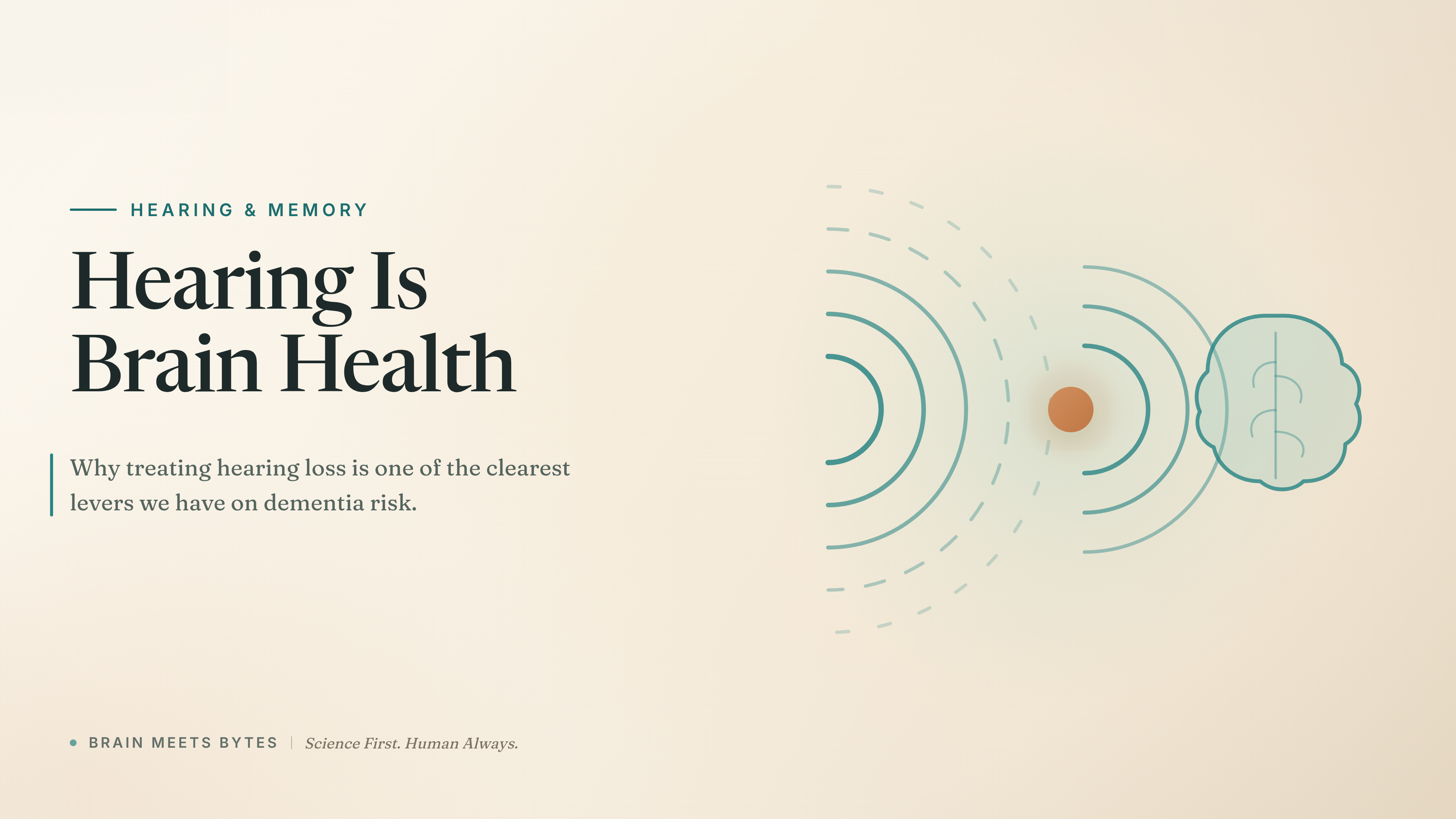
Hearing loss has not been proven to cause dementia, but it is one of the strongest modifiable risk factors linked to it. The 2024 Lancet Commission on dementia lists untreated hearing loss among 14 risk factors that together may account for nearly half of dementia cases.
Hearing loss has not been proven to cause dementia, but it is one of the strongest modifiable risk factors linked to it. The 2024 Lancet Commission on dementia lists untreated hearing loss among 14 risk factors that together may account for nearly half of dementia cases. Treating it with hearing aids is a practical step worth taking.
What does the research say about hearing loss and dementia?
Large population studies have repeatedly found that people with untreated hearing loss are more likely to develop dementia than people with normal hearing. The 2024 Lancet Commission on dementia prevention, intervention and care brought this evidence together, identifying 14 modifiable risk factors, including hearing loss, and estimating that addressing all of them could prevent or delay nearly half of dementia cases. Hearing loss stood out as one of the factors with the largest potential impact, largely because it is so common.
Still, an association does not prove cause. Both conditions become more common with age, and a shared factor could influence both. What we can say with confidence is that hearing loss is common, treatable and connected to brain health.
Why might hearing loss affect the brain?
Scientists have proposed several explanations, and more than one may be true at the same time:
- Cognitive load. When sound arrives muffled, the brain works harder to decode speech, which may draw resources away from memory and thinking.
- Social isolation. Conversations become tiring, so people withdraw from gatherings and phone calls. Social isolation is itself one of the Lancet Commission's 14 risk factors.
- Reduced stimulation. Less sound coming in may mean less activity in the brain areas that process it.
- Shared causes. Conditions such as diabetes or poor blood vessel health may damage both the inner ear and the brain.
If you read our earlier piece on technology and loneliness, the isolation pathway will sound familiar.
Do hearing aids actually lower dementia risk?
The honest answer is "possibly, for some people." The best evidence so far comes from the ACHIEVE trial, a randomized U.S. study presented at the Alzheimer's Association International Conference in 2023. It followed 977 adults aged 70 to 84 with untreated mild to moderate hearing loss for three years. Half received hearing aids plus support from an audiologist. The other half received health education sessions.
Across the whole group, hearing care did not significantly slow cognitive decline. However, in a subgroup of participants who already had more risk factors for cognitive decline, the hearing intervention slowed decline by 48% over three years compared with the education group. The researchers described this as encouraging but in need of further study.
So hearing aids are not a guaranteed shield against dementia. They do reliably improve communication and quality of life, and for people at higher risk they may help protect thinking skills. Given how few downsides they have, the Lancet Commission's call to make hearing aids available to all who need them makes sense.
What are the signs that a parent may have hearing loss?
Hearing loss usually creeps in slowly, and family members often spot it first. Common signs include:
- Turning the TV or radio up louder than others find comfortable
- Asking people to repeat themselves, especially in noisy restaurants
- Mishearing words and answering a different question than the one asked
- Avoiding phone calls or handing the phone to someone else
- Saying that others mumble
- Pulling back from family gatherings or group conversations
A person who seems confused may simply not have heard you, so rule out hearing problems first.
How do you get hearing tested and choose a hearing aid?
Start with a primary care doctor, who can check for simple causes such as earwax and refer you to an audiologist. A standard hearing test involves listening for tones and words through headphones.
There are more routes to a hearing aid than ever:
Option | Who it suits | What to know
- Option: Prescription hearing aids — Who it suits: Moderate to severe loss, complex needs — What to know: Fitted and adjusted by an audiologist; ongoing support included
- Option: Over-the-counter (OTC) hearing aids — Who it suits: Adults with perceived mild to moderate loss — What to know: Allowed by the FDA since 2022; sold without an exam; you set them up yourself
- Option: Personal sound amplifiers — Who it suits: People with normal hearing in specific settings — What to know: Not designed to treat hearing loss
Many modern hearing aids connect to smartphones by Bluetooth for streaming calls and adjusting volume, and rechargeable models spare fingers from tiny battery doors. Look for a trial period and a clear return policy, and check what your insurance or Medicare plan covers.
How can families help someone adjust to hearing aids?
Getting the devices is only half the job. Many people stop wearing them because everything sounds too loud or the fit feels odd. A little support helps:
- Encourage wearing them daily, starting with a few hours in quiet settings
- Return to the audiologist for adjustments rather than giving up
- Set up phone reminders for charging or cleaning
- Face the person when you speak and reduce background noise
*Want to keep learning about the everyday choices that support a healthy brain? Explore more articles and podcast episodes, and join our community at brainmeetsbytes.com.*
Frequently asked questions
- Does hearing loss cause dementia?
- Hearing loss is strongly linked to a higher risk of dementia, but research has not proven it directly causes it. The 2024 Lancet Commission lists it as one of 14 modifiable risk factors, so treating it is a reasonable step.
- Can hearing aids reverse dementia?
- No. There is no evidence that hearing aids reverse dementia. They can make communication easier for someone already living with it, which may reduce frustration.
- At what age should I get my hearing checked?
- There is no single rule, but a baseline test in midlife with regular checks afterward is sensible. Ask your doctor sooner if you notice warning signs.
- Are over-the-counter hearing aids good enough?
- For adults with perceived mild to moderate hearing loss, OTC hearing aids can be a helpful and more affordable option. If loss is more severe, or if you notice sudden changes, pain or ringing, see a doctor or audiologist first.