
Delirium vs. Dementia: How to Tell Sudden Confusion Apart
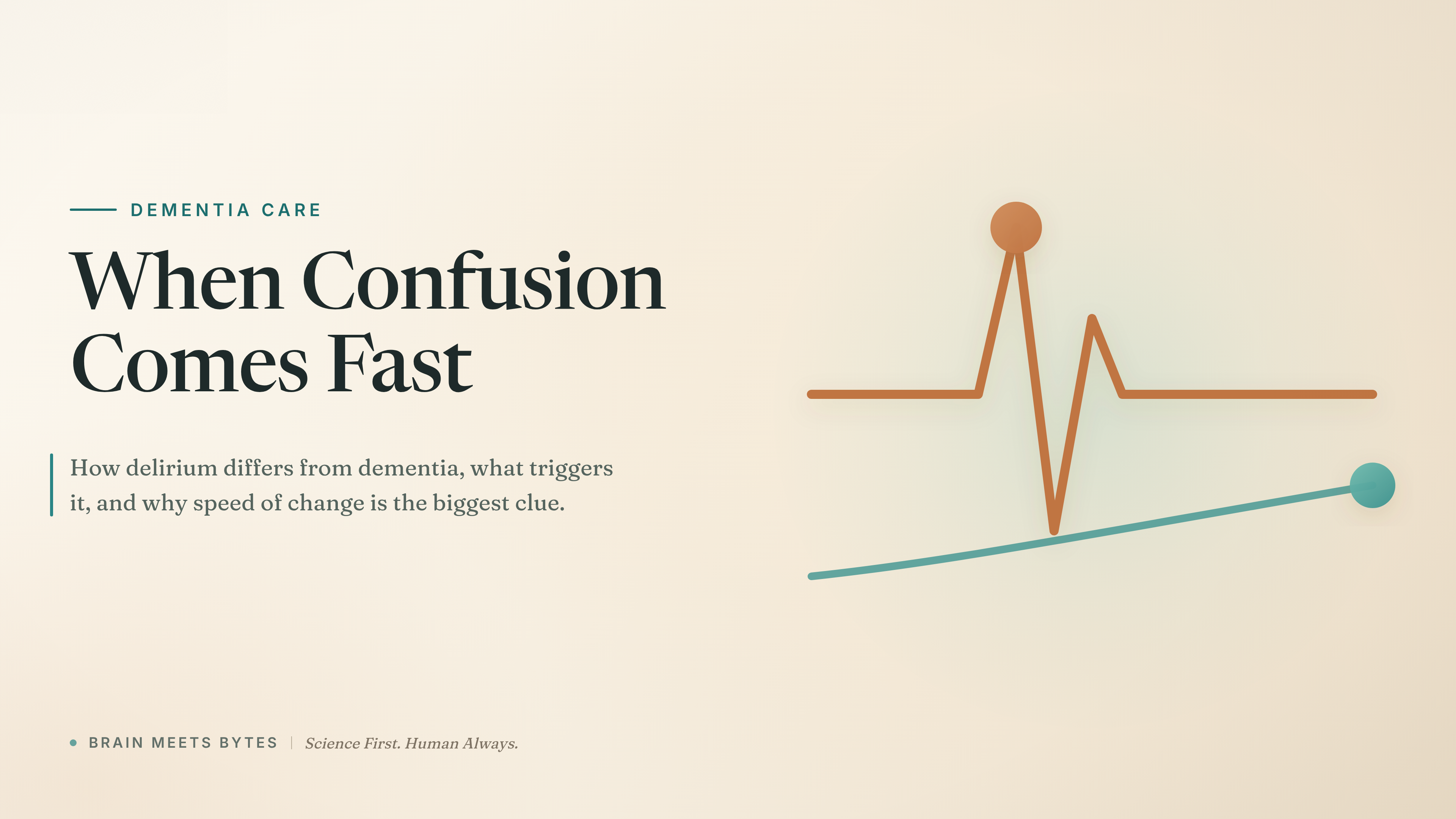
Delirium is confusion that comes on fast, over hours or a few days, and it usually has a medical trigger such as an infection, dehydration, pain or a new medication. Dementia develops slowly over months and years.
Delirium is confusion that comes on fast, over hours or a few days, and it usually has a medical trigger such as an infection, dehydration, pain or a new medication. Dementia develops slowly over months and years. The speed of the change is the biggest clue, and sudden confusion should always be checked by a doctor the same day.
What does delirium look like?
A family member who was chatting normally on Sunday is muddled, drowsy or oddly agitated by Tuesday. They can't follow a conversation. They drift off mid-sentence, or they're up at 3 a.m. convinced there are strangers in the house. It often comes and goes through the day, which can make people doubt what they saw.
There's also a quiet version that gets missed all the time. The person just becomes withdrawn and sleepy. Nobody calls the doctor because they aren't causing trouble.
How is delirium different from dementia?
Think of three questions.
How fast did it start? Delirium: hours or days. Dementia: so gradually that families often can't name the month it began.
Can they pay attention? Attention is badly hit in delirium. In early dementia, a person can usually focus on a conversation even if they forget it later.
Does it swing? Delirium fluctuates a lot, sometimes clear in the morning and lost by evening. Dementia has bad days too (see our piece on sundowning), but the overall picture changes slowly.
The two often overlap. Having dementia roughly doubles or triples the chance of delirium during an illness or hospital stay, and it can look like the dementia has suddenly jumped ahead.
What causes delirium in older adults?
Usually something in the body, not the brain itself. Common triggers include:
- Infections, especially urinary tract infections and chest infections
- Dehydration or constipation
- Pain, including pain the person can't describe
- New medicines or dose changes, especially sleeping pills, strong painkillers and drugs with anticholinergic effects
- Surgery and anaesthesia
- Low oxygen, low blood sugar or salt imbalances
- Alcohol withdrawal
Often there's more than one cause stacked together. Keeping a simple list of every medication and when it changed makes the doctor's job much easier. Our guide to medication management tech covers apps that do this for you.
What should you do if someone suddenly becomes confused?
Treat it as urgent. Call their doctor or go to urgent care the same day, and go to the emergency department if they're very drowsy, can't be woken properly, have a high fever, trouble breathing or seem to be in serious pain.
When you get there, say clearly: "This is new. Last week they were managing on their own." Clinicians who meet an older person for the first time may assume the confusion is their baseline. You're the one who knows it isn't.
Can delirium be prevented in hospital?
Not always, but a lot of it comes down to small, practical things families can help with. Bring their glasses and hearing aids and make sure they're actually being used. Keep a clock and a written date in view. Encourage drinking water. Push for daytime light and night-time quiet. Visit, talk about normal things, and bring a familiar object or photo.
Does delirium cause lasting damage?
Most people improve once the cause is treated, though it can take weeks. Some, especially those who already had memory problems, don't fully return to how they were before, and research links delirium with faster cognitive decline later. That's one more reason to treat it as a medical event, not just "a confused patch." If things haven't settled a few weeks after recovery, ask for a proper memory assessment so you have a new baseline to work from.
Frequently asked questions
- Can a urinary tract infection cause confusion in older adults?
- Yes. A UTI is one of the most common triggers of delirium in older people, and confusion may be the first or only sign. Fever and burning are often missing.
- How long does delirium last?
- Often days to a couple of weeks once the cause is treated, but some people take months to recover fully. Older adults with dementia tend to recover more slowly.
- Can someone with dementia also get delirium?
- Yes, and it's common. People with dementia are at higher risk, and delirium can look like their dementia suddenly getting much worse.
- Can delirium be prevented in hospital?
- Not always, but simple steps help: glasses and hearing aids in, enough water, a clock and calendar in view, daytime light, good sleep at night and a familiar face visiting.